How to Bet Tanking (Right as the League Tries to Stop It)
Let us boldly enter the scariest time of year for NBA bettors — but also maybe the most profitable — the post–All-Star break. We have a diverse tapestry of the type of NBA basketball we are prone to witness during this period. It’s a warm-up lap for the best teams in the league, who are now worried about health as much as, or more than, playoff positioning. It’s a sprint for teams trying to claw their way from the Play-In into the playoffs proper, or from the lottery into the Play-In. And it’s fast-paced scrimmage season for all the bad teams in the league, looking to develop players and, ideally, also lose games.
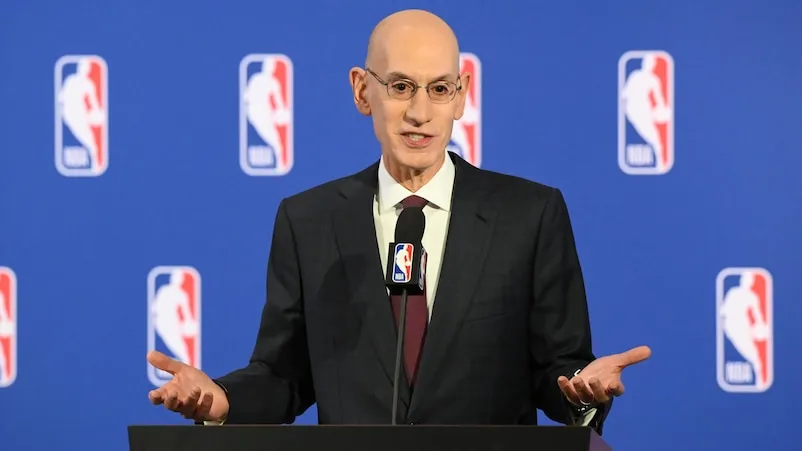
Known worldwide as “tanking season,” we now have indications that the manipulation of game play that has defined the period in the past is perhaps now as extreme or more extreme than ever. NBA Commissioner Adam Silver said in his annual AS-break State-of-the-League press conference that tanking is “worse this year than we’ve seen in recent memory.” The league just fined the Utah Jazz and the Indiana Pacers for what it viewed as obvious competitive manipulation, the second straight year Utah has been fined. Silver has even said he is “considering all remedies,” including potentially taking away draft picks.
In other words, the incentives have become so transparent that the league office is now openly discussing structural reform. But no reform is immediate. Today — just as last week before these fines — teams are thinking ever more about this very exciting upcoming NBA draft class, which front offices already view as unusually strong at the top and deeper than average through the lottery and into the mid-first round. For bottom-tier teams, that makes losing strategically valuable even without landing the No. 1 pick.
If this draft is top of mind for half the league at least, it must stay top of mind for us as bettors, too, when predicting NBA outcomes.
Incentives drive behavior. And behavior drives pace. And pace — even more than skill or efficiency — drives totals.
If we separate teams into two basic groups, we see a clear break in late-season style of play.
Since 2023–24 (last two seasons), here’s what the data shows post–All-Star break:
Bad team vs. non-bad team: 59% Overs (135–95)
Bad team vs. bad team: 42% Overs (30–42)
Non-bad team vs. non-bad team: 52% Overs (438–402)
Post–All-Star break, especially bad teams (we used a cutoff of 35% win percentage) tend to go Over versus good teams and Under versus other bad teams.
Why?
I think bad teams — i.e., tanking teams, or 'teams who are prioritizing winning in future seasons' (if we’re being charitable) — have an additional incentive to play faster versus good teams for two reasons.
First, more possessions — especially early-clock possessions — give their young developing players more opportunities. And against good teams, that means more opportunities to prove their mettle vs. good competition (i.e., the type of competition they will eventually need to be good against if the team is to improve). Remember, these teams aren’t “tanking”; they’re prioritizing development for their young players (or as Cartman would say, their “student ath-a-letes”). Failing is good. As John Hollinger has long noted, one of the strongest correlations between a rookie’s early NBA profile and future impact is a high turnover rate. Teams want players who feel comfortable enough in NBA action to try things and push the envelope. They get there sooner by telling them, “don’t worry about the score, play fast, try things, push the envelope.”
Second, playing faster helps them lose.
If a team is expected to be one point worse than its opponent per every 10 possessions (or 10 points worse over 100 possessions), they are much more likely to steal a win if there are fewer possessions. If there’s only one possession, these teams might win 45% of the time — just like a faulty coin flip can still land the wrong way a good chunk of the time. But flip that faulty coin hundreds of times and it will always show its bias. In this case, that bias is the superior team eventually getting the upper hand.
Look at the worst teams last season and the teams with the fastest pace:
Memphis Grizzlies
Atlanta Hawks
Chicago Bulls
Washington Wizards
Utah Jazz
How did they finish? Memphis (11th), Atlanta (10th), Chicago (11th), Washington (16th, with a historically bad net rating), Utah (14th). Speed does not equal success.
Let's take a case study of a team that is bad this year, but has recently made the jump from bad to actually pretty good: the Indiana Pacers.
In his first year, Rick Carlisle suddenly turned Indiana from an also-ran, blah bad team, into a bad team that played blazingly fast. The move that jump-started this was trading Domantas Sabonis for turbo-charged big guard Tyrese Haliburton. After that trade, the Pacers became a team that still got walloped most nights — but played fast. During this time, players like Andrew Nembhard and Aaron Nesmith became much better relatively quickly. Eventually, they acquired enough assets and developed enough players to get good. Only then did they slow back down.
Pacers league ranks tell the story:
21–22 pre-trade: 20th pace, 24th net rating
21–22 post-trade: 9th pace, 25th net rating
22–23: 5th pace, 25th net rating
23–24: 2nd pace, 10th net rating (Conference Finals)
24–25: 7th pace, 13th net rating (Finals)
Only after they had something to protect did the pace moderate — as if they finally cared about the net result of each possession. This season, the Pacers are 10th in pace at 101.7 possessions per game. You might think they’ve slowed down without Haliburton. In a way, yes — but that 101.7 pace number is exactly where they were when they ranked 2nd in 2023–24 or 5th in 2022–23. They haven’t slowed down. More teams have adopted this philosophy, and worse teams are now playing even faster.
So how do we take advantage of this?
The answer is not to blindly play bad teams Over every game. Let’s look again at the split: bad teams go Over 59% of the time against non-bad teams, but only 42% against other bad teams.
Why do bad teams go Under in the post–All-Star tank-a-thon when facing each other?
Totals algorithms already bake in year-to-date pace and efficiency. If bad teams are playing artificially fast, shouldn’t we expect a compounding, super-fast, super-high scoring affair when they meet?
No. We only see 42% Overs because that pace is already priced into both sides — and more importantly, the incentive dynamic disappears. These bad teams often actually want to win these games and save face during miserable seasons. Ironically, these are the games that matter.
Instead, we want Overs when bad teams face opponents still playing for something.
In fact, the tranche just above them — teams with win percentages between 36% and 50% — produces the highest Over rates and the worst ATS results for these bad teams.
Translated to English: since 2023, March through June, regular season only, when a ≤35% team faces a 36–50% opponent, those bad teams are 20–53 straight up, 29–43–1 ATS — so great fade candidates. And the totals in those games are 45–28 to the Over (61.6%), with an average total of 223.4.
When a bad team is up against a 'not-so-bad team,' these bad teams lose these games. They don’t cover. And they go Over — consistently.
This season, games meeting this criteria in February are already 5–3 to the Over, clearing by 6.8 points per game.
Adam Silver can fine teams. He can threaten draft reform. He can say he’s considering every possible remedy. But until incentives change, behavior won’t. And as long as incentives remain misaligned, let’s take advantage of the state of play.